May 15, 2026

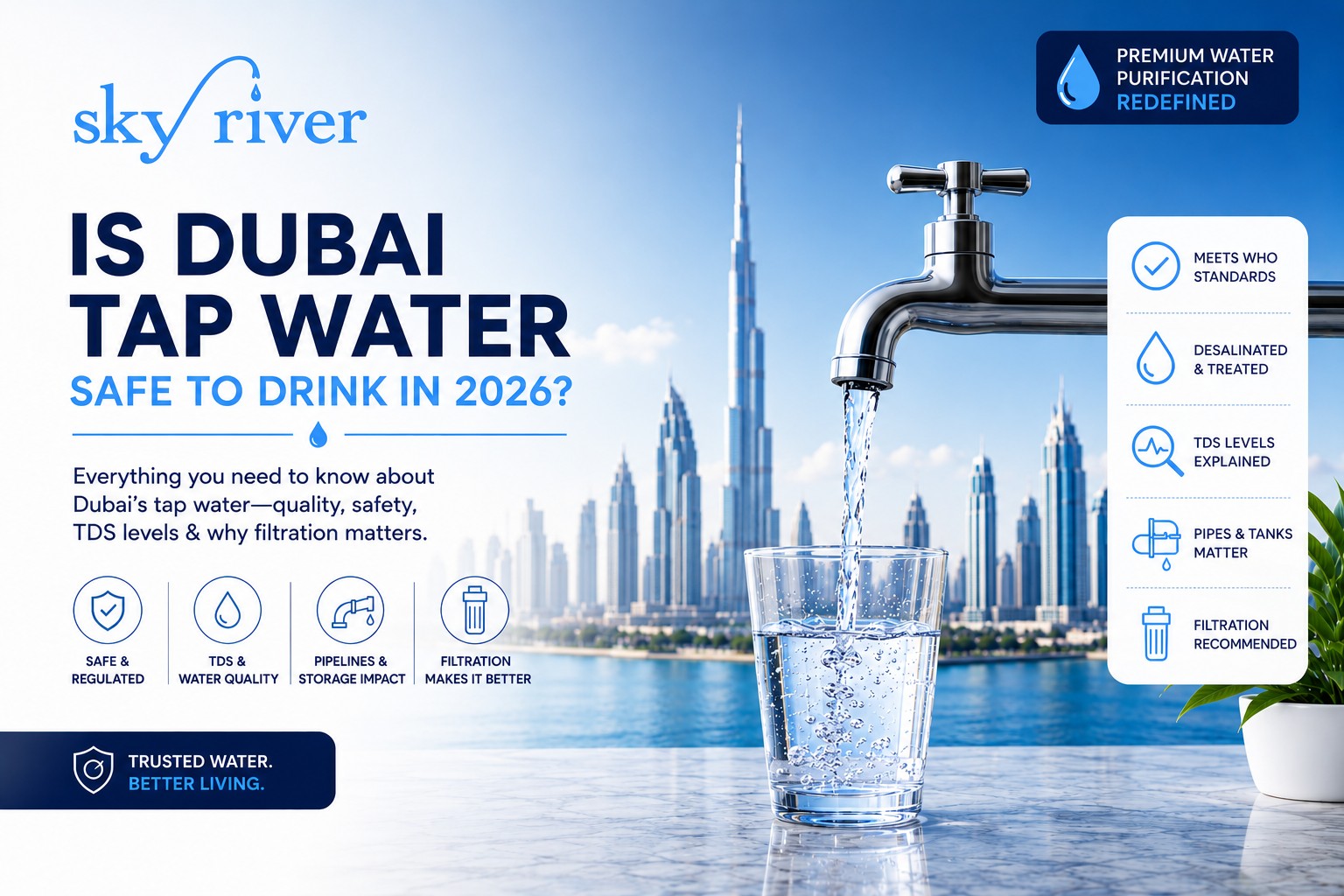
If you’ve recently moved to Dubai — or you’ve been here for years and just started wondering — you’re not alone in asking: is Dubai tap water actually safe to drink?
The short answer is yes, technically. Dubai’s tap water meets international safety standards and is monitored by the Dubai Electricity and Water Authority (DEWA). But “safe to drink” and “ideal to drink” are two very different things. In this guide, we’ll walk through everything you need to know about the quality of Dubai’s tap water in 2026: where it comes from, what’s in it, and why so many residents choose to filter it before drinking.
Dubai has almost no natural freshwater sources. The city relies almost entirely on desalinated seawater from the Arabian Gulf, processed through large-scale reverse osmosis (RO) and multi-stage flash (MSF) desalination plants operated by DEWA.
This is actually one of the most advanced water treatment systems in the world. The desalination process removes salt, bacteria, viruses, and most contaminants to produce water that meets World Health Organization (WHO) standards before it enters the distribution network.
So far, so good. But the journey from the desalination plant to your tap is where things get more complicated.
Dubai’s water distribution network is vast. Water travels through hundreds of kilometres of pipelines — some of which are ageing — before reaching your home or office. Along the way, a few things can happen:
Pipe corrosion and sediment: Older pipes, particularly in buildings constructed before 2000, can leach metals like lead, copper, and zinc into the water. You won’t taste them, but over time they can accumulate in the body.
Rooftop storage tanks: Most apartment buildings and villas store water in rooftop tanks before it’s pumped to individual units. These tanks can harbour bacteria, algae, and sediment if they’re not cleaned regularly (Dubai regulations require cleaning twice a year, but compliance varies widely across older buildings).
Chlorination: DEWA adds chlorine to the water to keep it pathogen-free during distribution. This is a standard and safe practice, but chlorine can affect the taste and smell of your water — and some research suggests long-term chlorine exposure is worth minimising.
Re-mineralisation gap: The desalination process strips nearly all minerals from the water — including beneficial ones like calcium and magnesium. What comes out is technically pure, but it’s essentially “empty” water from a mineral standpoint.
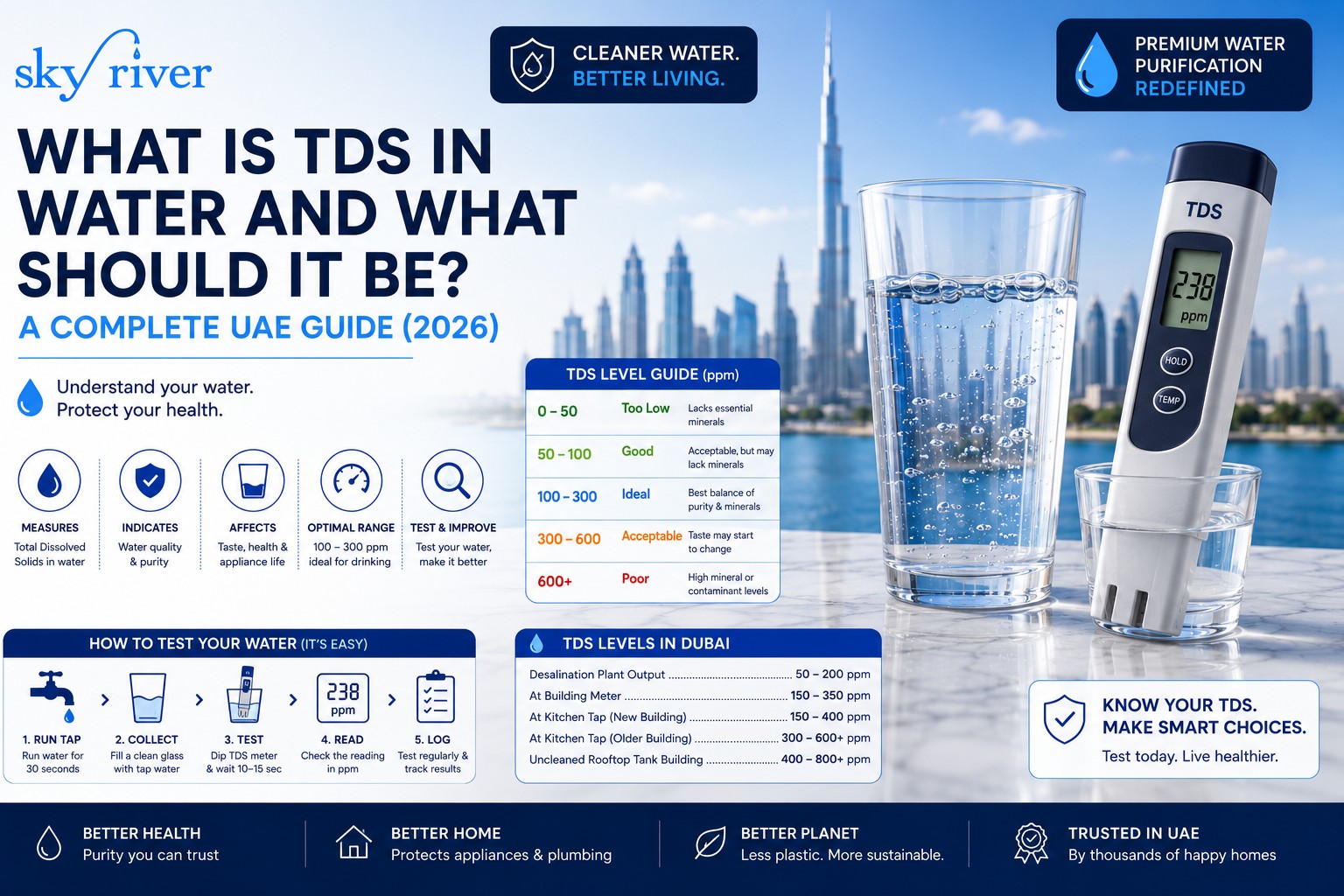
TDS stands for Total Dissolved Solids — a measure of all the minerals, salts, metals, and organic compounds dissolved in water, expressed in parts per million (ppm).
The WHO recommends a TDS level of 300 ppm or below for ideal drinking water. DEWA’s treated water typically leaves the plant with a TDS of around 150–300 ppm, which is within healthy range.
However, by the time water reaches your glass, TDS levels can vary significantly depending on your building’s pipes and storage tank condition. In some older buildings in Deira, Bur Dubai, and parts of Abu Dhabi, TDS readings from the tap can exceed 500 ppm — noticeably affecting taste and raising concerns about pipe contamination.
You can test your tap water TDS easily and cheaply with a digital TDS meter (available on Amazon.ae for around AED 30–50). If your reading is consistently above 400 ppm, it’s a strong signal that a filtration system would benefit your household.
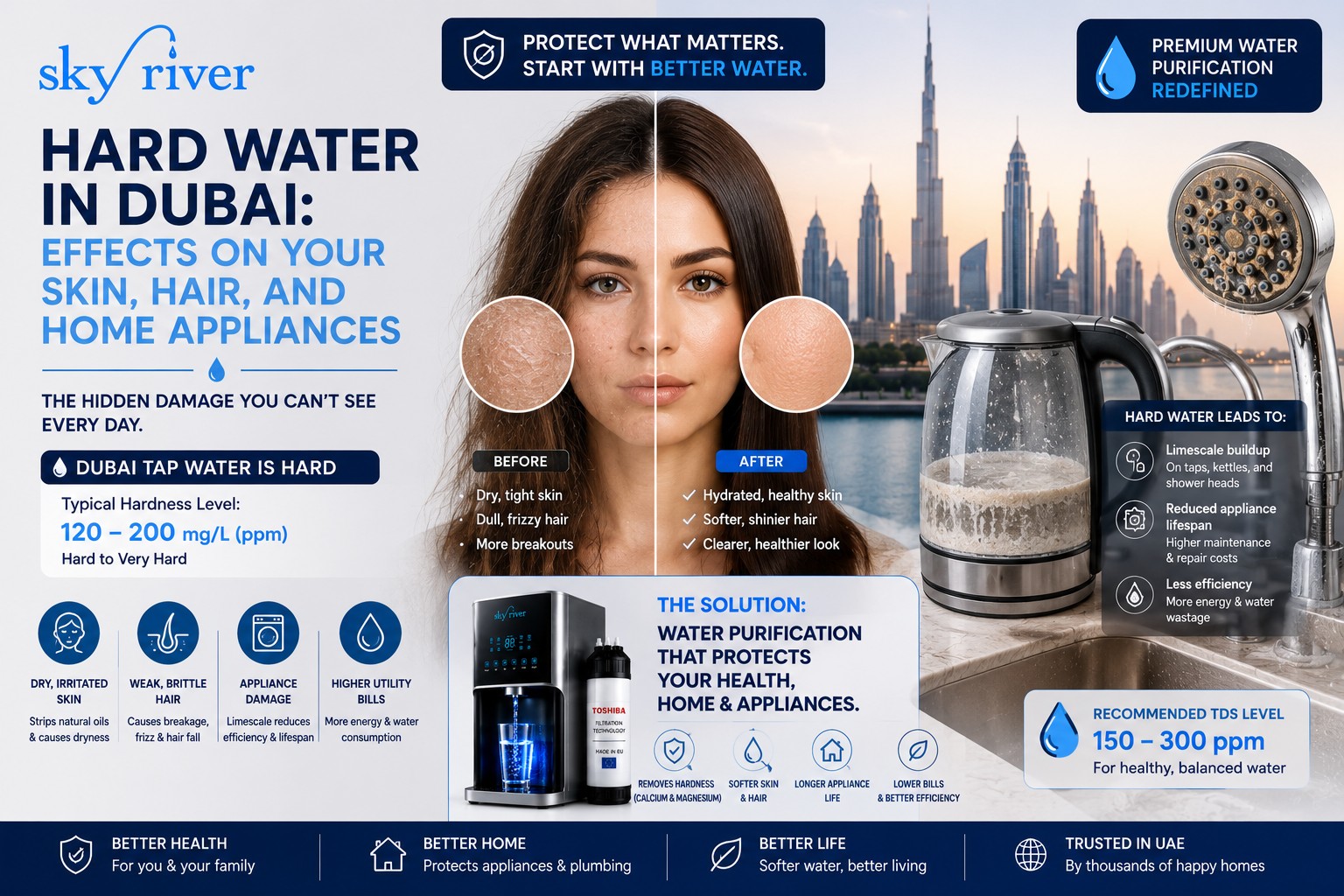
Dubai tap water is considered moderately to hard in many areas. Water hardness is caused by high levels of calcium and magnesium carbonate. While these minerals are not harmful to drink, hard water has a range of effects you’ve probably already noticed:
If you’ve noticed a white chalky residue around your taps or inside your kettle, that’s hard water calcification — a daily reminder that your water is carrying more mineral load than ideal.
This is a question we get frequently, and the answer requires extra care. While DEWA’s treated water is safe for adults under normal conditions, babies and young children have more sensitive digestive systems and are more vulnerable to contaminants.
For infants under 12 months, UAE health authorities and international paediatric guidelines generally recommend using filtered or bottled water when preparing formula. The concern is not so much the water at the source, but the unknown condition of building pipes and storage tanks — especially in older properties.
A quality in-home filtration system gives parents peace of mind by removing sediment, chlorine, bacteria, and potential pipe contaminants before the water reaches their child’s bottle.
Many Dubai residents solve the “is the tap safe?” question by defaulting to bottled water — either 5-gallon dispensers or single-use plastic bottles. But is this actually a better option?
Bottled water issues:
Filtered water advantages:
When you run the numbers, a quality home water filtration system pays for itself within the first year compared to the ongoing cost of bottled or dispenser water. Read our full cost comparison.
Even if DEWA’s water at the plant is pristine, a good filtration system at your home adds a final layer of protection. Here’s what it removes:
And the best systems, like our SkyRiver Toshiba+ Water Purification Dispenser, go further by adding back essential minerals (calcium, magnesium, potassium) and balancing the water’s pH to between 7.5 and 8.5 — the optimal range for hydration and health.
Dubai tap water is safe in that it won’t make you acutely ill. DEWA does an excellent job of treating water to international standards before it leaves their facilities.
But between the desalination plant and your glass, the water passes through pipes, storage tanks, and infrastructure of varying age and condition. The result is water that may contain sediment, residual chlorine, pipe metals, and inconsistent mineral levels — not ideal for daily drinking, cooking, or preparing baby food.
Our recommendation: use a quality in-home water filtration and purification system. It’s cleaner than tap water, safer and more environmentally responsible than bottled water, and significantly more affordable than 5-gallon dispensers over time.
Can I cook with Dubai tap water?
Yes, cooking with tap water is generally fine — boiling kills bacteria and most pathogens. However, filtering it first removes chlorine (which can affect the taste of food) and sediment, giving you better results in the kitchen.
Does Dubai tap water taste bad?
Many residents notice a slight chlorine taste or flat mineral taste in tap water. This is normal but can be eliminated by filtration, particularly through activated carbon and mineral enhancement stages.
What TDS level is safe to drink?
WHO guidelines suggest below 300 ppm is ideal, with 300–600 ppm considered acceptable. Above 600 ppm and the water has a noticeably altered taste. Test your tap water with a TDS meter to see where yours falls.
Is filtered water better than bottled water in Dubai?
In almost every way — it’s cleaner (no plastic leaching), cheaper, more environmentally friendly, and always available. Point-of-use filtration removes contaminants at source, rather than trusting a plastic bottle that may have sat in a hot warehouse.
Ready to make the switch to clean, filtered water at home or in the office? Get a free quote from SkyRiver Systems today. Our EU-made, Toshiba-powered purification systems are trusted by leading hotels, government offices, and thousands of UAE households.